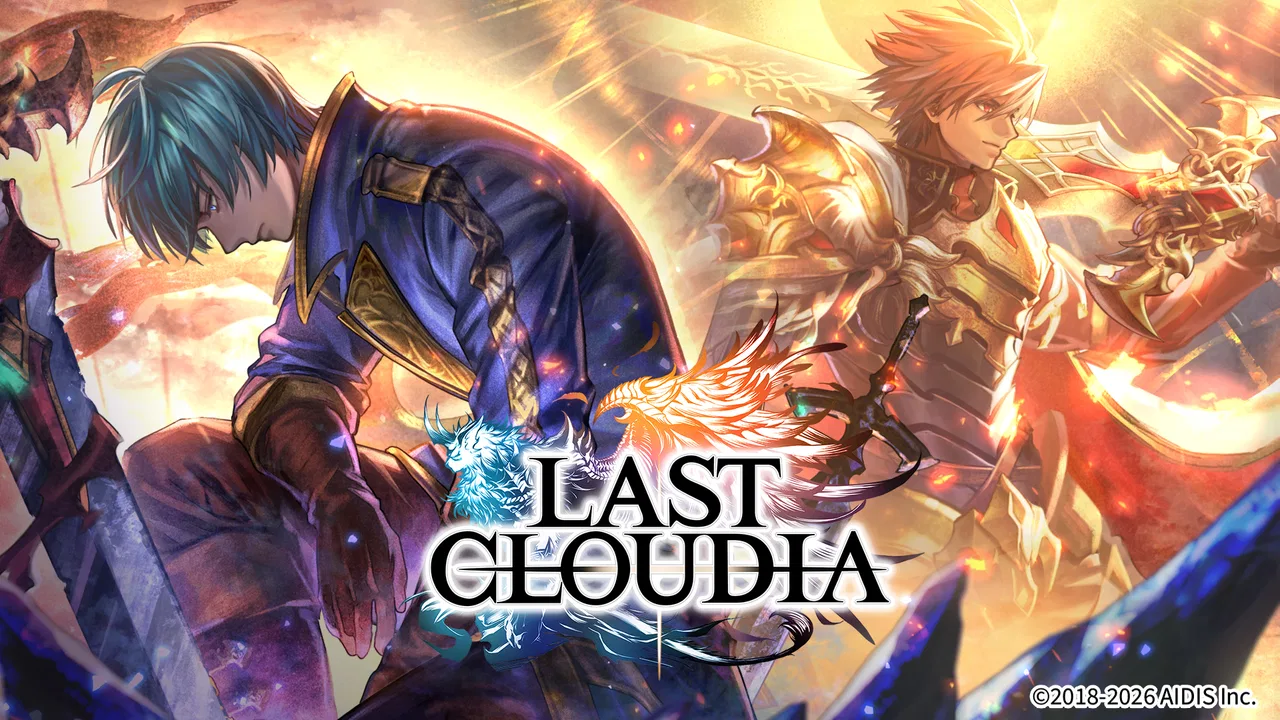
LAST CLOUDIA
- 4.7
- Rating
- 1.00M
- Installs
- Free
- Price

 Analysis by App-foxy
I spent my time with LAST CLOUDIA focusing on the idea that gives this role-playing game its identity: building characters around a flexible training system instead of treating every hero as a fixed package. That difference matters. Rather than simply collecting a character and following the obvious upgrade path, I found myself making decisions about how each one should grow and what kind of job I wanted that character to perform.
That approach makes the game feel more personal than many mobile RPGs. A character is not only something to obtain; it becomes a project. I could think about whether I wanted a dependable attacker, a sturdier front-line option, or a more specialized build, then shape my investment around that goal. The process is especially appealing if you enjoy experimenting with teams and seeing a familiar unit perform differently after careful training.
Developed by AIDIS Inc., the game is free to start and belongs firmly to the role-playing category. It is rated Teen, and its current version is 7.4.0 with support for Android 7.1 and later. The large audience is reflected in more than a million installs, while its average score sits at 4.7 from roughly 26,000 ratings. Those figures suggest a healthy level of interest, but my recommendation comes more from how the training choices affect everyday play than from popularity alone.
You May Also Like

 Blood Strike: 2.5 Anniversary
Blood Strike’s Loadouts Turn Every Drop Into a Tactical Gamble
A close look at Blood Strike’s custom loadouts: how fast access to signature weapons reshapes its battle royale rhythm, rewards preparation, and narrows the gap between fights.

 Pandora - Music & Podcasts
Pandora’s Music Is Easy to Start, but Harder to Recover
Pandora’s strength is its low-effort path from a seed to a station. Its weak spot is how much confidence it asks you to place in connection, setup, and quiet recovery.

 8 Ball Pool
 Is Built on Rivalries, Rematches, and Routine
A close look at the rivalries, rematches, shared routines, and unanswered safety questions that turn a quick pool match into a persistent mobile community.

 Samsung Music
’s Quiet Strength Is Playing What You Already Own
Its reach comes less from spectacle than from dependable access to a personal library. That simplicity is both the app’s strongest retention engine and its ceiling.

 AccuWeather: Weather Radar
AccuWeather Review: A Quick, Clear Forecast for Everyday Decisions
For everyday plans, the best forecast is the one you can understand quickly. AccuWeather makes rain timing, radar, and local conditions easy to act on, with a few trade-offs.

 Hill Climb Racing
Why Hill Climb Racing Still Turns Crashes Into One More Run
A tiny car, a bumpy hill and one more upgrade: Hill Climb Racing keeps resurfacing because its simple chaos makes every near-miss feel personal.
More From Our News Desk



Why the training system changes the way I play
I found that the training system gives the game a more useful early goal than simply chasing the next upgrade: decide what each character should contribute, then build toward it. That makes the first choices feel purposeful, especially if you pause after a battle to notice where the team is falling short. With that starting point in mind, the next question is how those choices feel once play becomes a routine.
A character becomes a decision, not just a reward
The strongest part of the experience is the freedom to decide what I want from a character before spending resources. In a more rigid mobile RPG, a newly acquired hero often has an obvious role, and upgrading them mostly means pushing every available improvement as far as possible. Here, the flexible training concept encourages me to pause and ask a more useful question: what does my team actually need?
That question changes the value of a new character. I do not look only at whether the character is powerful in isolation. I also consider whether the unit fills a gap in my current group, whether the build will make difficult encounters easier, and whether the required investment fits my available resources. This makes progression feel closer to planning a small squad than simply raising a collection of digital figures.
The practical benefit is control. I can make progression serve my play style instead of allowing the default design of each character to dictate every battle. That does not remove the need to learn the game, but it gives experimentation a genuine purpose. If a character feels underwhelming at first, I am more likely to investigate the build and training choices before deciding that the unit is useless.
Flexible growth rewards patience
The system also changes how I think about mistakes. When a game offers several ways to develop a character, early decisions can feel intimidating, especially when resources are limited. My solution was to avoid trying to create a perfect build immediately. I first watched how a character performed in ordinary fights, identified the moments where the team struggled, and then used training to address the most obvious weakness.
That workflow is more reliable than copying a supposed ideal build without understanding it. A damage-focused character may look impressive on paper, but if the rest of the party cannot survive long enough for that damage to matter, the investment may not solve the real problem. Likewise, improving a defensive role can be more valuable than adding another offensive upgrade when a battle is being lost through attrition.
This is one of the less obvious strengths of the game: the training system encourages me to diagnose a problem rather than react to a result. After a failed encounter, I ask whether the issue was survival, damage, timing, or team balance. Only then do I change a character. That habit reduces waste and makes progression feel more deliberate.
It is more interesting than a simple auto-upgrade path
Many mobile role-playing games are designed around quick sessions and straightforward improvement. That can be convenient, but it also means the player may spend much of the time pressing upgrade buttons and watching numbers rise. LAST CLOUDIA gives me more reason to stay involved because the growth choices have consequences for how I approach the next encounter.
I still appreciate convenience when I am busy, but I do not want every decision removed. The flexible training system gives the game a middle ground: routine progression can remain approachable, while players who enjoy planning have room to think more deeply. In my experience, that balance is the main reason the game holds attention beyond the first few sessions.
What using the system feels like in practice
In practice, I treat each training adjustment as a small experiment rather than an invitation to rebuild everything. I pick one weakness, make a focused change, and use the next battles to see whether the team feels more dependable; that creates a clear progress signal even when growth is gradual. The same hands-on approach also makes it easier to tell when a tougher encounter is exposing a real gap rather than just asking for more time.
Start with a role, not a shopping list
My most useful routine was to define a role for each character before opening the upgrade options. I would decide whether the unit was meant to lead attacks, support the group, absorb pressure, or cover a specific weakness. This simple step prevented me from spreading resources across unrelated improvements just because they were available.
For a new player, the temptation is to improve everything a little. That feels safe, but it can produce a team where nobody is particularly good at anything. I found it more effective to give each character a clear responsibility and then make training choices that reinforced it. Once the main role was stable, I could add flexibility without losing the identity of the build.
This is also where the game differs from a collection-focused alternative. In a title built mainly around gathering the biggest roster, the natural impulse is to replace a weaker character as soon as a new one arrives. Here, I was more willing to keep working with a character because the training system gave me ways to adapt that unit to my needs.
Use battles as tests for the build
I do not recommend making several changes at once. If I alter a character in many ways and the next battle goes better, I cannot tell which decision helped. A more useful method is to make one meaningful adjustment, play enough to observe the result, and then decide whether another change is necessary.
This matters particularly when a team feels inconsistent. If a character is defeated too quickly, the answer may not be a simple defensive improvement. The problem could be that the unit is being asked to perform a role it was not prepared for, or that the rest of the team is not supporting the intended plan. The training system gives me tools, but it does not replace the need to understand the battle situation.
I also learned not to judge a build only by how quickly it clears easy content. A setup that looks excellent in short encounters may struggle in a longer fight, while a slower and sturdier arrangement can be more dependable. Looking at consistency rather than one impressive victory helped me make better long-term choices.
Resource discipline matters more than constant rebuilding
Flexible progression can create the illusion that every experiment is harmless. It is not. Even without inventing a precise cost for each decision, the general lesson is clear from play: resources have value, and careless experimentation can slow the development of the whole team. I therefore treated early training as a process of narrowing possibilities rather than repeatedly starting over.
My preferred order was simple. I established the main team, gave each member a practical role, tested the group, and only then made more ambitious changes. This approach is less exciting than rebuilding after every battle, but it produces a stronger foundation. It also leaves room for adapting later when a new character or a tougher challenge changes what the team needs.
Players who enjoy optimization will probably appreciate this restraint. Players who want to freely reset every decision may find the system less comfortable. The game rewards thought before investment, which is a strength for strategic players but a source of friction for anyone who prefers consequence-free experimentation.
A realistic evening session
Imagine that I have a short break after work and want to make progress without committing to a long play session. I can use that time to run familiar battles, observe which character is failing to contribute, and make one targeted training adjustment. The next session then has a clear purpose: I am testing whether the change improved the team rather than playing without a plan.
On a quieter evening, I can go further by comparing two different approaches for the same character. One build may aim for reliable performance across ordinary fights, while another may be designed around a narrower role. The value of this kind of session is not only the immediate result. It teaches me how the character responds to training and makes future decisions faster.
That is where the game fits best in my routine. It works for short, purposeful check-ins, but it also offers enough character planning to reward longer sessions. I never felt that I had to choose between casual progress and deeper involvement; the amount of thought I put in largely determined how much the system gave back.
The tradeoffs behind the freedom
That freedom has a tradeoff: it can make progression harder to read for someone who wants the game to point to one correct upgrade at every turn. I enjoy the room to shape a character, but I would be cautious about spending resources just because several options look appealing. Thinking about how challenge and commitment interact helps explain why this system suits some players far better than others.
More choice also means more uncertainty
The same flexibility that makes the game interesting can make it harder to read. A player who is new to mobile RPG systems may not immediately know which training direction is sensible. When several options look attractive, it is easy to spend resources on improvements that feel useful individually but do not form a coherent team plan.
I would not call this a flaw in the concept, but it is a genuine learning cost. The game asks me to understand my characters instead of simply following a single upgrade button. That is satisfying once the logic becomes familiar, yet it can feel slower at the beginning than a more guided role-playing game.
My advice is to resist the pressure to perfect everything immediately. Choose a clear role, make conservative improvements, and let actual battles reveal what needs attention. The system becomes much less confusing when I treat it as a series of small tests rather than a puzzle that must be solved before playing.
The free entry point does not remove monetization pressure
LAST CLOUDIA is free to play, but it includes in-app purchases ranging from $0.99 to $99.99 per item. That range is important to keep in mind before investing serious time. A free download makes it easy to begin, while the presence of purchases means some players may feel pressure to spend when they want faster progress, more flexibility, or a stronger roster.
I think the game is best approached with a personal spending boundary decided in advance. If I know that I am playing to enjoy the training and team-building process, I am less likely to treat every obstacle as a reason to buy something. If I am uncomfortable with any form of purchase-driven progression, the free entry point may not be enough to make the game feel relaxing.
This is also why the training system matters so much. Thoughtful development can make the roster I already use feel more effective, but it does not magically remove the broader pressures of a free-to-play RPG. Players who mainly want a one-time purchase with a completely fixed progression path should look toward premium role-playing games instead.
It may not suit players who want instant action
Someone looking for a game that is mainly about quick reflexes or uncomplicated battles may not connect with this one. The appeal here is not only what happens during a fight; it is the preparation behind the fight. Choosing how to train a character, assigning a role, and reviewing the result are central parts of the experience.
That makes it a poor match for anyone who dislikes menus, planning, or revisiting a character after a disappointing performance. It is also less suitable for a player who wants every new character to be immediately dominant without any investment. The game asks for attention before it gives back its best results.
On the other hand, people who enjoy finding a better answer after a failed attempt will likely appreciate the design. I found losses less frustrating when they provided information about my team. A defeat could point to a role problem, an investment problem, or a need for a different approach, which made the next attempt feel meaningful.
Who gets the most from this role-playing game
I think this role-playing game is at its best for people who enjoy setting small goals, testing a team, and adjusting their plan when a battle reveals a weakness. It can fit a short break when I have one specific improvement in mind, yet it is less appealing if I want immediate action without character-building decisions. That distinction leads naturally to the bigger question of who will find its longer progression rewarding.
A strong fit for planners and experimenters
I would recommend LAST CLOUDIA first to players who like building characters over time. If you enjoy deciding what a unit should become, testing that idea, and adjusting the team as challenges change, the flexible training system gives you a reason to stay engaged. It is particularly satisfying when you prefer making your own choices rather than copying a fixed path.
It also suits players who like a roster to feel personal. Two people can approach the same character with different priorities, and the training focus can reflect the kind of team each person enjoys using. That sense of ownership is more valuable to me than simply having a large number of characters available.
A useful choice for players with limited play windows
The game can work well for someone who has only a few short opportunities to play during the day. A focused session can have a clear goal: improve one weak role, test one training decision, or prepare a character for a particular challenge. I prefer this to games where progress feels meaningful only after a long uninterrupted session.
At the same time, it does not punish a player who wants to spend longer thinking about team development. The deeper I went into the training choices, the more I noticed the difference between a merely functional group and a team built around a deliberate plan. That flexibility makes the game easier to fit around different schedules.
Who should choose another kind of RPG
I would steer away from it if your ideal mobile RPG is a completely guided experience with minimal decision-making. A simpler game may be more enjoyable if you want to tap through upgrades, use obvious roles, and move on. I would also suggest looking elsewhere if you strongly dislike in-app purchases or prefer a self-contained premium game with no free-to-play structure.
Players who want a purely competitive experience may also find the character-building focus less appealing than a game built around direct skill and short matches. LAST CLOUDIA asks me to value preparation, adaptation, and long-term investment. Those are exactly the qualities that make it rewarding for me, but they are not universal preferences.
My final recommendation
After spending time with it, I see LAST CLOUDIA as a role-playing game whose best idea is not simply collecting characters but deciding how those characters should develop. The flexible training system changes the rhythm of play: battles reveal problems, training offers possible solutions, and the next encounter shows whether the choice worked.
That loop is more engaging than a routine upgrade ladder, especially when I take the time to give each character a clear job. My most useful tip is to build around team needs, change one major thing at a time, and judge success by consistency rather than one fast victory. Those habits make the system easier to understand and help protect resources from careless spending.
The game is not effortless. Its freedom creates a learning curve, and the free-to-play structure includes purchases from $0.99 to $99.99 per item. Still, for a Teen-rated mobile RPG that is free to start, it offers a level of character ownership that I do not always find in more rigid alternatives. I would recommend it to anyone who enjoys planning a team and watching a carefully trained character become genuinely useful. If you want instant action with no investment decisions, this is probably not the right fit; if you want your choices to shape how your roster plays, it is well worth trying.
FAQs for LAST CLOUDIA
01What kind of game is LAST CLOUDIA?
LAST CLOUDIA is a story-driven Japanese-style mobile RPG that combines pixel-inspired characters with dynamic 3D battle effects. You build a party of heroes, guardians, and other units, then fight through quests, bosses, and event content in real time. Its presentation focuses heavily on dramatic storytelling, anime-style scenes, collectible characters, and fast-paced combat rather than simple turn-based battles.
02Is LAST CLOUDIA free to download and play?
Yes, LAST CLOUDIA can generally be downloaded and played for free on supported Android and iOS devices. However, it uses optional in-app purchases for premium currency, character or equipment summons, resource bundles, and other conveniences. Progress is possible without spending money, but players who want to collect limited units quickly or compete more seriously may encounter incentives to purchase additional currency.
03Does LAST CLOUDIA require an internet connection?
An internet connection is normally required for LAST CLOUDIA because the game connects to online servers for account data, events, updates, summons, rankings, and other live-service features. You should expect to play while connected through Wi-Fi or mobile data. Offline access is not the main focus, and unstable connectivity may interrupt battles, prevent login, or cause problems when downloading additional game files.
04Is LAST CLOUDIA suitable for beginners and free-to-play players?
LAST CLOUDIA is approachable at the beginning, especially because the early story introduces combat, character development, skills, and equipment gradually. Nevertheless, the game becomes more complex as you manage units, abilities, Arks, resources, and team combinations. Free-to-play players can enjoy the campaign and regular rewards, but patience is important because obtaining specific characters and upgrading a complete roster may take time.
05What should I know about the gacha and progression systems before downloading?
A major part of LAST CLOUDIA involves summoning characters, equipment, and other valuable content through gacha-style banners. Results are based on probability, and limited-time banners may encourage frequent spending, so it is wise to set a budget and check rates before using premium currency. Progress also depends on farming materials and strengthening units, meaning long-term planning is often more important than simply obtaining one powerful character.
Pros
- Deep real-time combat with satisfying skill chains and flashy abilities.
- Large cast of heroes and guardians offers many team-building options.
- Rich pixel-art presentation paired with an energetic
- cinematic soundtrack.
- Frequent events provide extra quests
- rewards
- and limited-time content.
- Generous progression systems let dedicated players strengthen units in many ways.
Cons
- Gacha rates and duplicate requirements can make top units expensive to obtain.
- The amount of currencies and upgrade materials may overwhelm new players.
- Farming stages repeatedly is often necessary to maximize characters and equipment.
- Some menus and loading screens feel dated compared with newer mobile RPGs.
- Competitive and endgame content can favor players who spend consistently.

LAST CLOUDIA
Gallery